
Jewelry Drill Press
What is it?
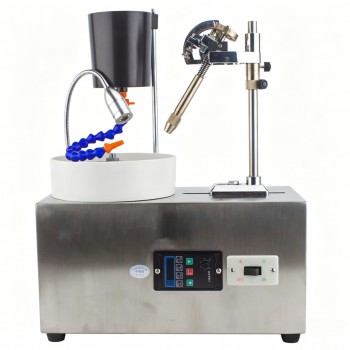
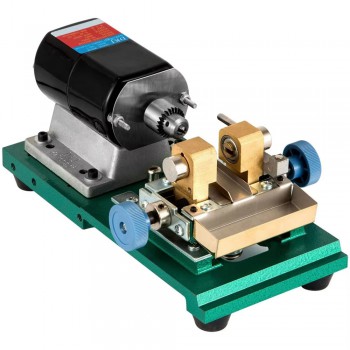
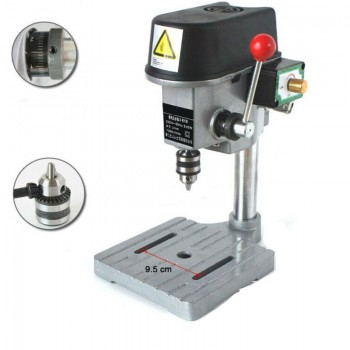
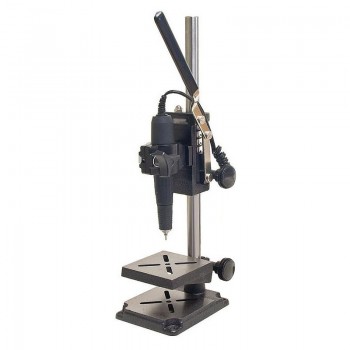
A jewelry drill press is a precision drilling machine designed for creating holes in jewelry pieces and related materials such as metal, wax, resin, or plastic. It operates by lowering a rotating drill bit into the workpiece at a controlled speed and depth. It is commonly used in jewelry design, stone setting, and model preparation where controlled movement and accuracy are required.
Working Principle and Function
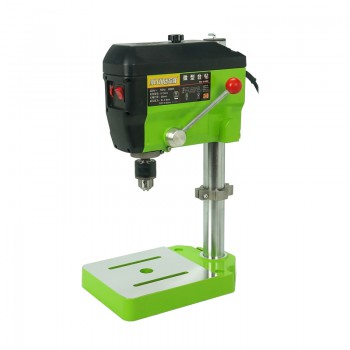
The machine functions through a vertical spindle powered by an electric motor. The operator adjusts spindle speed and drilling depth based on the material being processed. The drill head moves vertically along a column while the base secures the workpiece. In a mini drill press for jewelry, compact structure and adjustable speed options help users work on delicate items without causing deformation.
Structure and Characteristics
A typical setup includes a base plate, adjustable table, motor-driven spindle, and a chuck for holding drill bits. Speed may be controlled through a dial or belt-driven system, allowing suitable settings for materials such as gold, silver, brass, or copper. Some versions feature LED lighting, depth stops, or transparent guards to support visibility. A small benchtop configuration helps users operate in limited workspaces while performing detailed tasks.
Purchase and Operation Considerations
Before purchasing, users may review voltage requirements, available workspace, and included accessories. During operation, the workpiece should be secured to prevent movement. The drill bit must be aligned properly and lowered gradually to avoid breakage. Applying lubrication during metal drilling may reduce heat buildup. Eye protection is recommended, and loose clothing should be kept away from moving parts. After use, the tool should be turned off, cleaned, and stored properly.
Application Areas
A jewellers drill press is applied in jewelry workshops, model-making environments, stone-setting tasks, and metalworking. It supports drilling holes for jump rings, clasps, decorative components, and shaping wax or resin models. In addition to jewelry production, this tool is used in educational studios, repair workshops, and laboratories for training or prototyping activities.